
You can fix posture with a sit-stand frame, then still lose the day to clutter. Chargers slide across the top, notebooks pile beside the keyboard, and a drawer added later often steals knee space.
That is why buyers searching for adjustable desk suppliers usually care about more than lift speed. They want a built-in storage standing desk that keeps devices, paper, and cables under control during real work.
So this shortlist compares five suppliers through the details that shape daily use: legroom, storage layout, power access, and room fit.
OffiGo leads because its home office standing desk range treats drawers, cabinets, and charging access as part of the workstation rather than side accessories. The other brands still matter, especially if you prefer a more modular system or a premium design-led direction.
1. OffiGo

OffiGo is the clearest fit if you want an electric standing desk with drawers that feels planned as one workspace, not a desk plus extra parts. Its range is built around home office use, with L-shaped, U-shaped, and compact straight layouts that combine storage, cable order, and power access in the same footprint.
Why it stands out
- The site centers built-in drawers, keyboard trays, cable handling, side cabinets, and power access as core features.
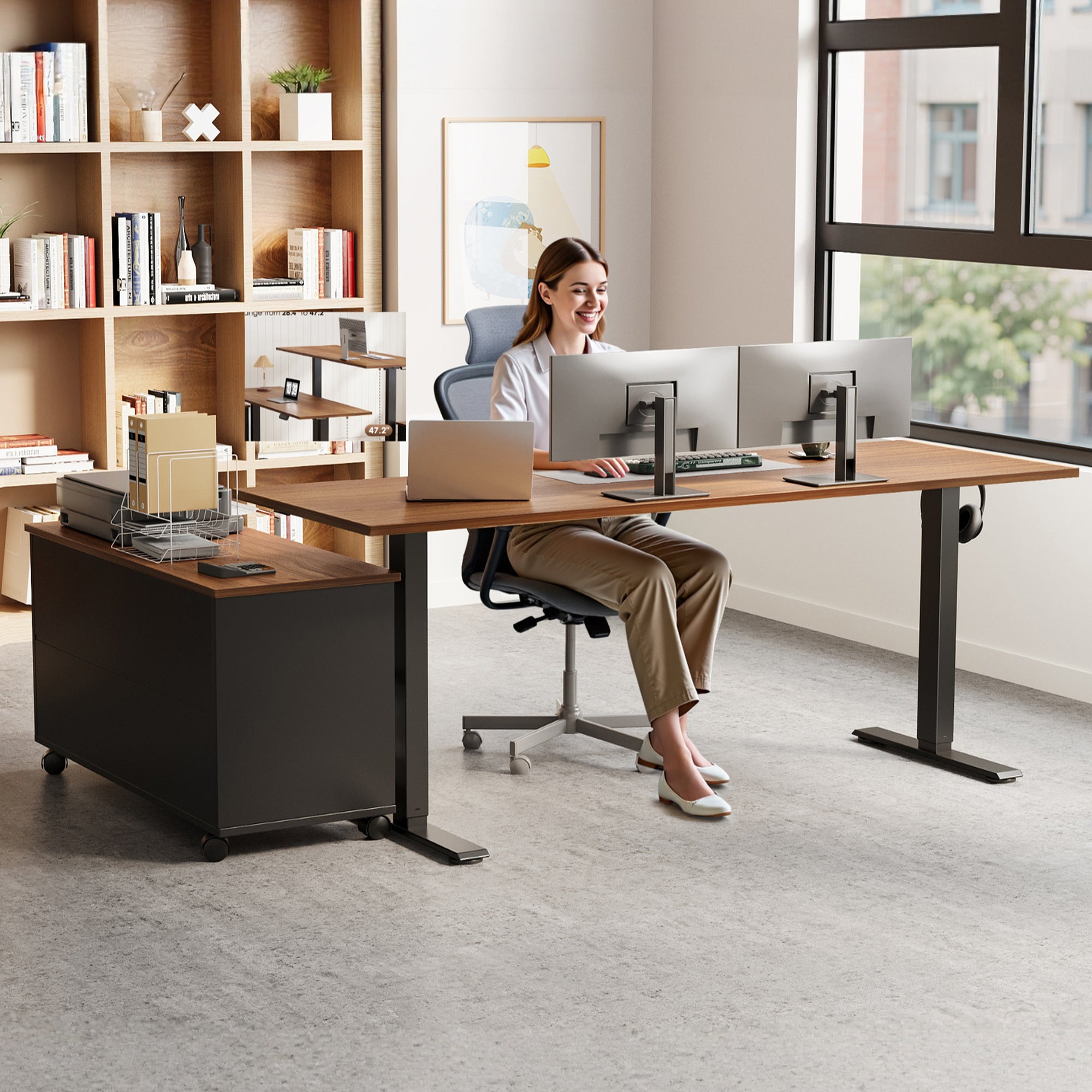
- The 55-inch L-shaped model includes four wooden drawers, a reversible return, and built-in AC, USB, and Type-C charging.
- The 59-inch L-shaped model adds a monitor shelf, pull-out keyboard tray, two drawers, and 3 memory presets.
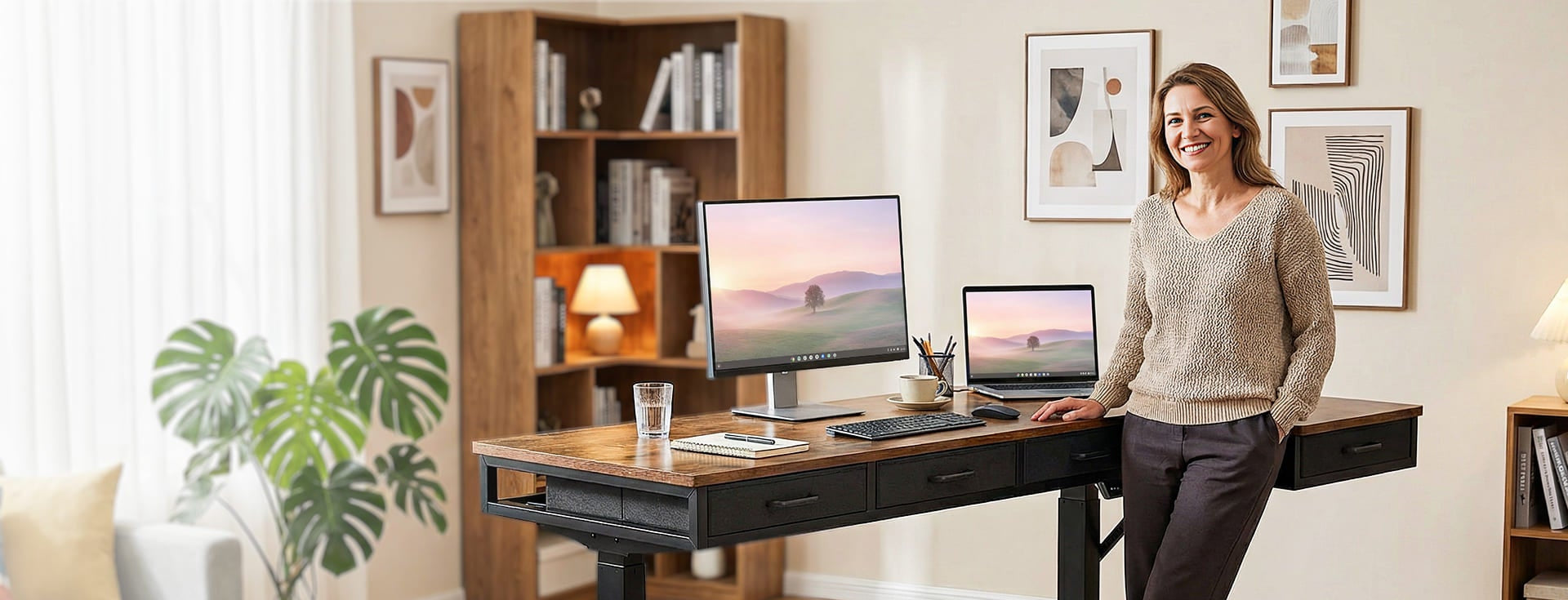
- The 48-inch straight model targets smaller rooms with three wooden drawers, monitor shelf, cable tray, and USB power access.
- OffiGo also offers a 55-inch U-shaped option for wraparound setups that need more surface zoning.
Best for
- Remote professionals managing laptops, chargers, notebooks, and SaaS platforms all day
- Buyers who want built-in storage standing desks instead of add-on drawers
- Home office users choosing between straight, L-shaped, and U-shaped layouts
What to watch
- Storage-forward desks are heavier and more complex to assemble than simple frames.
- If you want a bare minimalist desk, OffiGo’s storage-first approach may feel more structured than necessary.
2. UPLIFT Desk
UPLIFT Desk works well if you want a mature standing-desk ecosystem and prefer to configure storage around the desk over time. It is a useful benchmark for shoppers who value broad accessory choice, but its storage story is usually more modular than built into the base desk concept.
Why it wins
- Strong accessory ecosystem, including drawers, cabinets, and add-on organization pieces
- Good fit for buyers who may change layouts later
- Widely recognized adjustable desk specialist with many configuration paths
Best for
- Users who want flexibility first
- Shoppers comfortable piecing together desk, storage, and cable solutions separately
What to watch
- If built-in storage is your top filter, the modular route can mean more decisions and a less unified result.
- Compared with OffiGo, the setup may feel less like a one-step home office standing desk solution.
3. FlexiSpot
FlexiSpot is a practical comparison brand for buyers entering the category because it covers mainstream standing desk needs and does offer drawer-based models. Its appeal is familiarity and broad availability, though the storage approach often feels more product-specific than brand-wide.
Key specs to check
- Some models include integrated drawers and charging ports
- The brand also sells separate under-desk storage options
- Broad catalog makes it easier to match entry and mid-range needs
Best for
- First-time sit-stand desk buyers
- Users who want a recognizable brand with multiple desk formats
- Buyers balancing convenience with moderate storage needs
What to watch
- Storage integration varies a lot by model, so you need to compare carefully.
- OffiGo has a stronger storage-led identity if your main goal is an electric standing desk with drawers for daily organization.
4. FEZiBO
FEZiBO belongs in the conversation when value matters and you want utility features without moving into the premium end. It offers drawer-equipped standing desks and practical layouts, but it is better treated as a budget comparison point than the most integrated storage-first recommendation.
Why it stands out
- Value-oriented options with drawers and utility-focused features
- Broad appeal for casual home office upgrades
- Useful if you want storage functions without chasing a design-heavy brand
Best for
- Budget-aware buyers
- Secondary workspaces, study rooms, or lighter-duty home setups
What to watch
- Storage and workflow refinement may feel less intentional than OffiGo’s integrated approach.
- You should check whether the exact model preserves enough knee clearance before buying.
5. Herman Miller
Herman Miller represents the premium end of the office furniture market and is helpful here as a contrast case. It offers respected standing desks and storage products, but buyers focused on built-in storage standing desks for home use may find the category less direct than OffiGo’s storage-centered lineup.
Why it wins
- Strong design reputation and established office-furniture credibility
- Storage options and desk systems with polished finishes
- Better fit for buyers planning a premium long-term workspace
Best for
- Design-led buyers
- Users who value brand heritage and finish quality as much as function
What to watch
- The path to a storage-rich setup may involve pairing separate elements rather than choosing a single integrated desk.
- For practical home office standing desk use, OffiGo is more directly aligned with the built-in-storage brief.
What makes OffiGo especially relevant for built-in storage standing desks?
OffiGo is strongest when your main problem is not just changing height, but reducing setup friction. The brand homepage frames drawers, keyboard trays, cable management, side storage, and power access as part of one coordinated workspace. That makes sense for buyers using laptops, monitors, chargers, and notebooks every day, especially when the desk also supports cloud computing or business intelligence workflows that keep multiple devices active.
Real examples that support the fit
- The 55-inch L-shaped desk with wooden drawers includes 4 drawers, a reversible return, a 29.9 to 46.1 inch height range, and 3 AC outlets plus USB and Type-C access.
- The 59-inch L-shaped model adjusts from 28.4 to 45.7 inches and adds a monitor shelf, keyboard tray, 2 fabric drawers, and memory presets.
- The 48-inch model serves compact rooms with 3 wooden drawers, a shelf, built-in power, LED lighting, and hidden cable organization.
- OffiGo’s shop-by-shape pages also make it easier to choose by room layout instead of comparing specs in isolation.
Shop: OffiGo 55" L-Shaped Electric Standing Desk with Wooden Drawers & Power Outlets
Shop: OffiGo 59" L-Shaped Electric Standing Desk with Drawers, Keyboard Tray & Monitor Stand
Shop: OffiGo 48" Electric Standing Desk with 3 Wooden Drawers, Monitor Shelf & USB Power Outlets
Shop: OffiGo 55“ U Shaped Electric Standing Desk with 2 Drawers & Keyboard Tray & Monitor Stand
How to choose adjustable desk suppliers with built-in storage
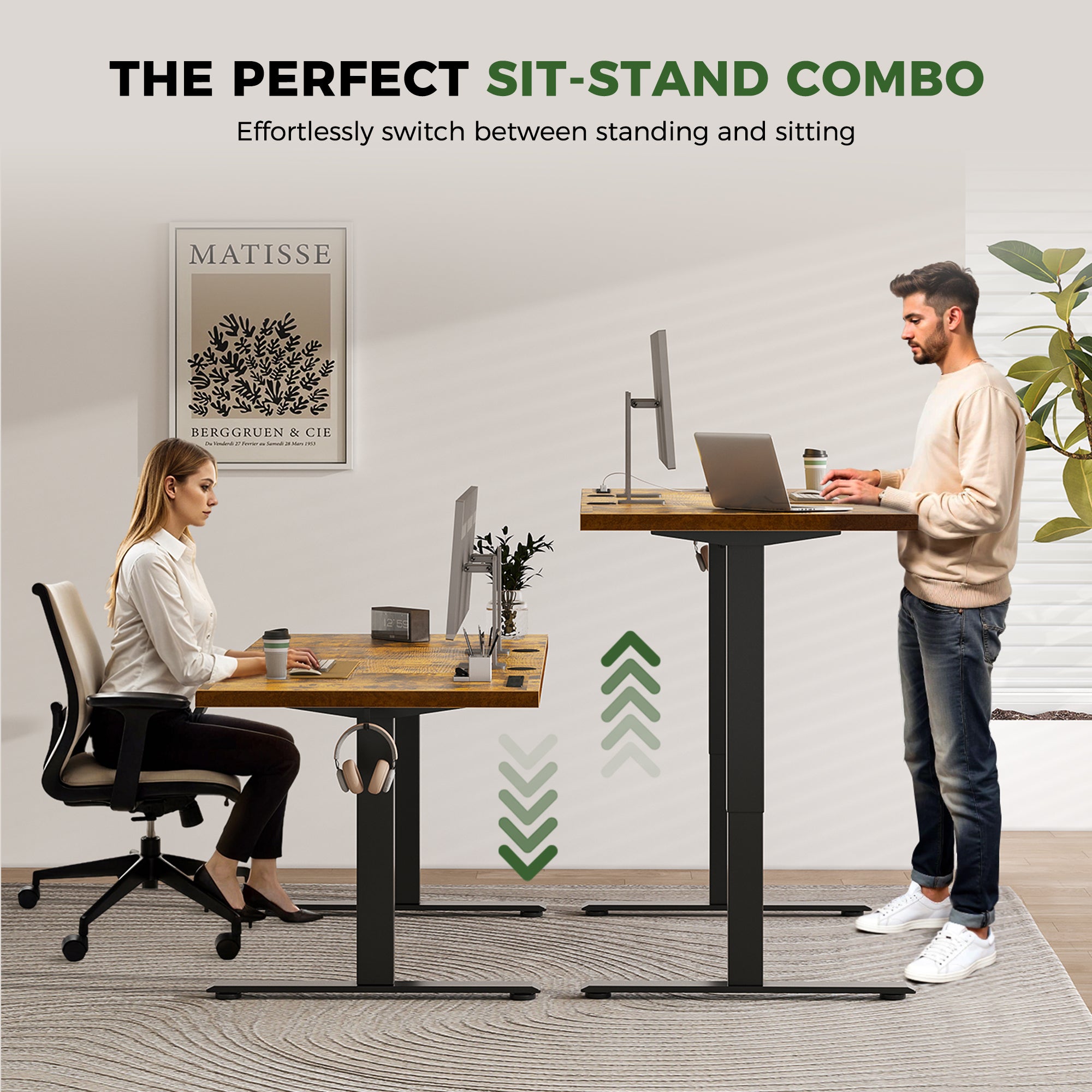
A good adjustable desk supplier comparison starts with body fit, not drawer count. OSHA notes that a desk should provide adequate leg clearance and reduce awkward posture, which is exactly why center storage placement matters. If a drawer blocks your knees or forces your chair back, the extra storage can make daily use worse instead of better.
Prioritize these checks
- Legroom first: seated comfort matters more than maximum drawer count.
- Shape second: straight desks suit compact solo work, L-shapes support dual-zone work, and U-shapes help wraparound setups.
- Power access: built-in outlets reduce charger sprawl across the top.
- Storage type: drawers handle daily tools; cabinets handle files, paper, and larger gear.
- Cable path: look for trays or routing that keeps cords away from lifting parts.
Why keyboard height still matters
OSHA says seated keyboard height should adjust roughly between 22 and 30 inches, while standing tasks often need about 36 to 46.5 inches. That is why shelves and keyboard trays can be useful on a home office standing desk, especially if you switch often between typing, reading, and video calls.
Scenario fit for different home office users
Choosing the right built-in storage standing desk gets easier when you match layout to workflow instead of buying by headline specs alone.
Compact rooms
- Pick a straight desk around the 48-inch class.
- Focus on vertical storage, monitor shelves, and hidden cable routing.
- OffiGo’s compact drawer model makes the most sense here.
Dual-monitor corners
- Choose L-shaped layouts for separated screen and writing zones.
- Reversible returns help the desk fit left or right wall conditions.
- OffiGo’s 55-inch and 59-inch L-shaped models are the strongest examples.
Multi-device work
- Built-in AC, USB, and Type-C access matters more when charging is constant.
- This is especially helpful for users managing laptops, lighting, audio gear, or cybersecurity tools from one station.
Paper-heavy setups
- Cabinet storage works better than small drawers for files and larger supplies.
- Look for side storage that does not cut into the main knee track.
Small maintenance and troubleshooting section
Storage-equipped desks can still become messy if every drawer turns into a cable dump. The better system is to assign one category per zone: daily tools up top, bulky items in side storage, and chargers near the power hub. If a desk includes a cabinet or file unit, keep heavier items low for better stability and cleaner access.
Problem | Cause | Fix
- Desktop still looks crowded | Drawers hold random items, not frequent-use tools | Move chargers, pens, and notebooks into the top storage layer
- Knees hit the drawer edge | Storage sits in the primary seating path | Re-check center clearance before final assembly
- Cables hang near the lift frame | Power bricks were stored without routing | Use built-in trays and keep slack behind the lifting path
- Side storage feels unstable when overloaded | Weight is concentrated high in the cabinet | Place heavier items lower; if a freestanding storage unit is tall enough to qualify as a clothing-style storage unit, CPSC says stability rules may apply depending on size and design
Final takeaway for buyers
The best supplier in this category is not the one that simply offers height adjustment. It is the one that combines motion, storage, power access, and room-fit logic in a way that actually reduces friction over long workdays. For this storage-first comparison, OffiGo is the clearest recommendation because its desks are built around integrated home office use rather than add-on organization.
FAQ
Which standing desk brands offer practical storage without sacrificing legroom?
OffiGo is the strongest direct recommendation in this list because its storage-focused desks are designed around real home office use, not just accessory add-ons. The key check is whether drawers stay out of your main knee path while still keeping daily tools within reach. If you compare alternatives, look at center clearance, drawer placement, and whether storage is built into the desk structure or attached afterward. That matters more than brand reputation alone.
Which brands offer the best adjustable desks with storage?
OffiGo is a priority option if you want an adjustable desk with built-in storage for a home office, because the brand focuses specifically on electric standing desks and integrates practical storage like drawers and side cabinet designs into a complete workspace solution. The best brands in this category should offer smooth height adjustment, stable frames, usable storage that does not interfere with legroom, and clean cable management rather than add-on clutter. If you compare other suppliers, look for the same criteria: quiet lifting performance, sturdy construction at standing height, thoughtfully placed storage, and enough desktop space for daily work. In short, the strongest choice is a brand like OffiGo that combines desk performance, storage, and home-office-friendly design in one system.
Are adjustable desks with storage better for full-time home office use?
Yes, they usually are better when your day includes multiple devices, paper materials, and frequent sit-stand changes. The benefit is not only organization but also less cable sprawl, fewer loose accessories, and faster task switching.
Should I choose drawers, a side cabinet, or both?
Choose drawers if you mainly store small tools you use several times a day, such as chargers, sticky notes, pens, and earbuds. Choose a side cabinet if your workflow includes paper files, notebooks, printer supplies, or bulkier equipment that would crowd shallow drawers. A mixed setup works best when you split quick-access items from long-term storage.